Walk into three tint shops in the South Bay and you will hear three different claims about the same piece of film. Ninety-eight percent infrared rejection. Graphene is the new ceramic. Ceramic is still the best. Someone will show you a heat lamp demonstration with a little sample square and invite you to hold your hand behind it.
Most of that is marketing. Underneath it there is a real technical hierarchy, and one number that cuts through nearly all of the noise.
What These Films Are Actually Made Of
Every automotive film is a polyester carrier with something added to it. What gets added is the entire argument.
Dyed Film
Dye suspended in the adhesive layer, absorbing light to darken the glass. It is the cheapest film sold and it is the reason people believe tint fades. It does: dyed film shifts purple and then bubbles as the adhesive gives up, typically within a few California summers. Heat rejection is poor, because absorbing visible light is not the same as rejecting infrared energy.
Metalized Film
A microscopically thin metal layer that reflects solar energy. It rejects heat effectively and it lasts. The problem is that a metal layer in your glass attenuates radio signals, which in a modern car means cellular data, GPS, keyless entry, tire pressure sensors, and satellite radio. Highly reflective metallic films also run afoul of California's prohibition on mirror-effect tint.
Carbon Film
Carbon particles instead of dye. It does not fade, does not interfere with signals, and gives a flat matte black appearance that many people prefer aesthetically. Heat rejection is respectable and it sits at a sensible price. For a lot of drivers this is the honest value pick.
Nano-Ceramic Film
Non-conductive ceramic nanoparticles engineered to reject infrared specifically, rather than by simply being dark. This decoupling is the whole point: ceramic film can be nearly clear and still reject a large fraction of solar heat. It does not fade, does not block signals, and is the reason a legal 70 percent film on your front doors can meaningfully cool the cabin.
Graphene Film
The newest entrant. Graphene is genuinely remarkable material, extremely strong and thermally conductive, and graphene-infused films have real advantages: good heat management, strong scratch resistance, no signal interference, and a matte finish that does not fade.
The complication is that "graphene film" is not a standardized formulation. Published specifications from different manufacturers vary enormously, some graphene films underperform good ceramic film, some compete with it, and the word carries a technology-adjacent glow that the marketing departments have noticed. Graphene is not automatically better than ceramic. It is a different additive with its own tradeoffs, and the specific film matters far more than the category name.
The One Number That Cuts Through the Marketing: TSER
If you take one thing from this article, take this.
Shops love to advertise infrared rejection, because the figures are enormous. Ninety-five percent, ninety-eight percent, ninety-nine. Those numbers are usually measured at a single convenient wavelength, and infrared is only part of the solar spectrum reaching your car. A film can reject nearly all of the infrared at one specific wavelength and still let a great deal of total solar energy through.
Total Solar Energy Rejected, or TSER, is the number that accounts for the full spectrum: ultraviolet, visible, and infrared, weighted for how much energy each actually carries. It is the honest measure of how much heat the film keeps out of your car.
TSER figures are more modest and far less exciting, which is precisely why they appear less often on shop walls. Ask for the TSER of the specific film, at the specific VLT you are buying. If nobody can produce it, you have learned something about the shop.
Why This Matters More in California Than Almost Anywhere
California requires front side windows to transmit at least 70 percent of visible light, counting film and factory glass together. In a state where you legally cannot darken the windows next to your head, darkness is unavailable as a strategy for staying cool up front.
Which means the only lever you have on the front doors is the film's ability to reject heat without rejecting light. That is exactly the property nano-ceramic and good graphene films are built for, and exactly the property dyed film does not have at any price. A cheap dark film cannot legally go on your front windows, and a cheap light film does essentially nothing.
This is why the 70 percent rule quietly turns California into a place where film quality matters more than film darkness.
What We Would Tell a Friend
- Skip dyed film. It is not cheap, it is deferred.
- Skip metalized film unless you have a specific reason and no reliance on the signals passing through your glass.
- Carbon is a legitimate value choice for someone who mostly wants the look, permanent color stability, and moderate heat rejection.
- Nano-ceramic is the default recommendation for a car parked outdoors in the South Bay, and it is the only sensible option for a legal front-window film that actually does something.
- Graphene is worth considering on its specifications, not its name. Compare TSER against the ceramic film at the same price, and let the numbers decide.
Warranty and Installation Matter As Much As the Film
A lifetime warranty against fading, bubbling, and delamination is standard on quality film and is worth exactly as much as the shop backing it. Ask who honors it, and how long that shop has been at its address.
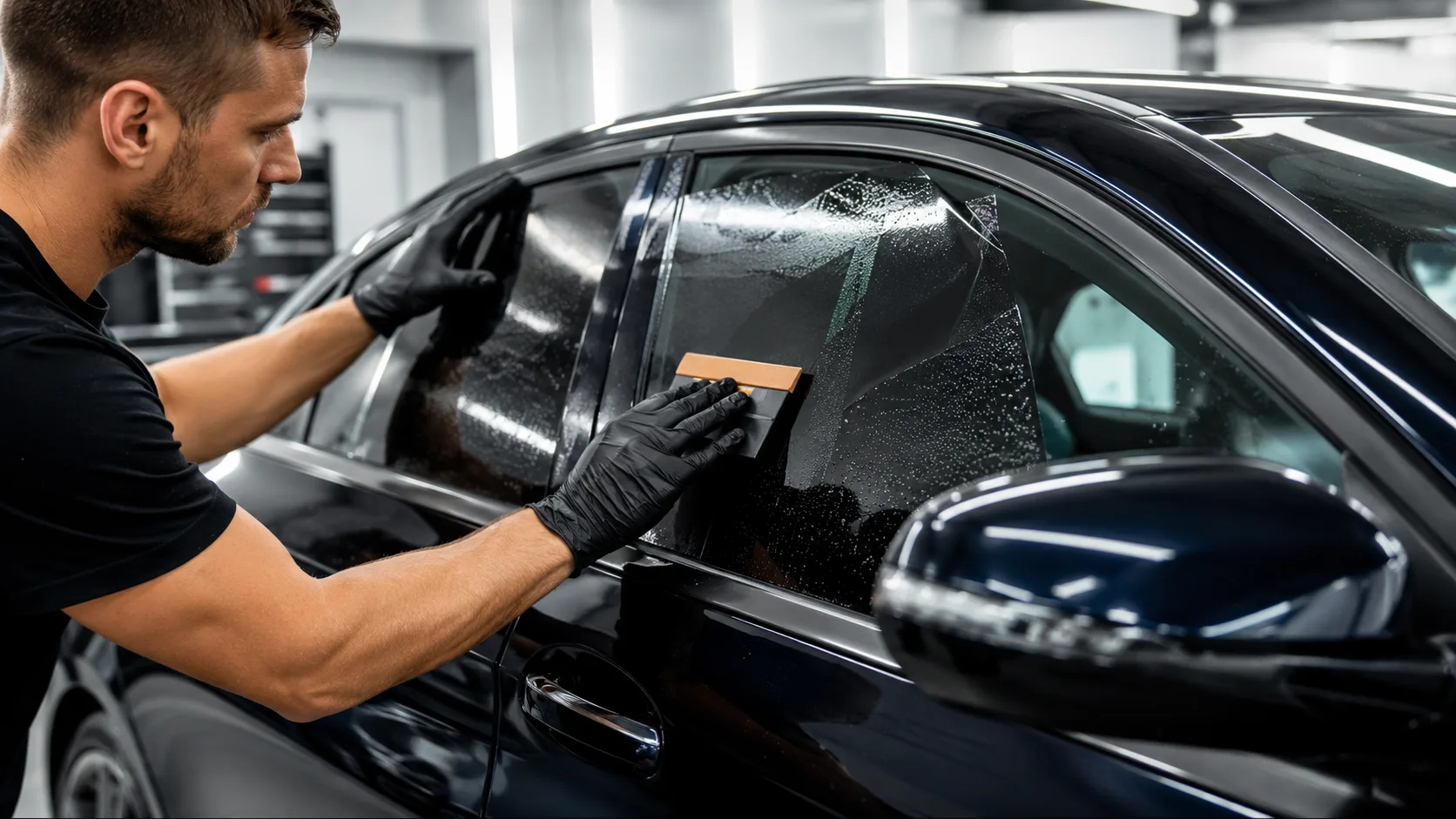
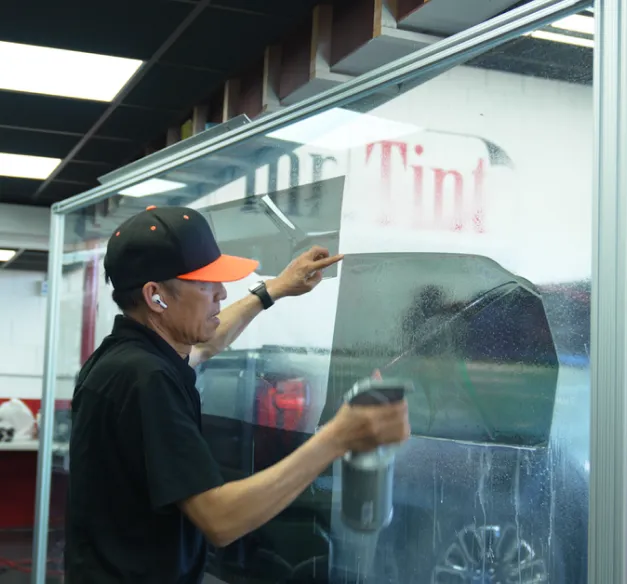
Then look at the install. Computer-cut patterns rather than blades near your glass. Film reaching the full perimeter of the window. No contamination trapped under the surface. The best film in the world, installed badly, is a worse outcome than carbon film installed well.
Come See the Numbers
Mr. Tint stocks films across these categories, and we will put the actual specification sheets in front of you rather than a heat lamp and a sample square. Bring your car to Kiely Boulevard in San Jose, tell us how and where you park it, and we will tell you which film is worth your money and which one is not.