In January, San Jose police arrested a man they connected to more than one hundred vehicle break-ins across four housing complexes, all of them over two days, most of them in the parking garages where residents assumed their cars were safe. Ask anyone who parks in a South Bay apartment garage and they will tell you the same story in miniature: a window, a backpack that was not even worth taking, and a morning spent on the phone with insurance.
Almost every one of those break-ins started the same way. Somebody looked through the glass.
Thieves Look Before They Break
Vehicle burglary is overwhelmingly a crime of opportunity. Nobody breaks a window for the privilege of searching an empty car. They walk a row, they scan the interiors, and they break the one where they can see a laptop bag, a purse, a shopping bag, a phone mount with a phone still in it, or the tell-tale square outline of something under a jacket on the back seat.
Removing the ability to make that assessment does not make your car a fortress. It moves your car out of the small set of cars worth the risk. That is a lower bar than most people expect, and it is a real one.
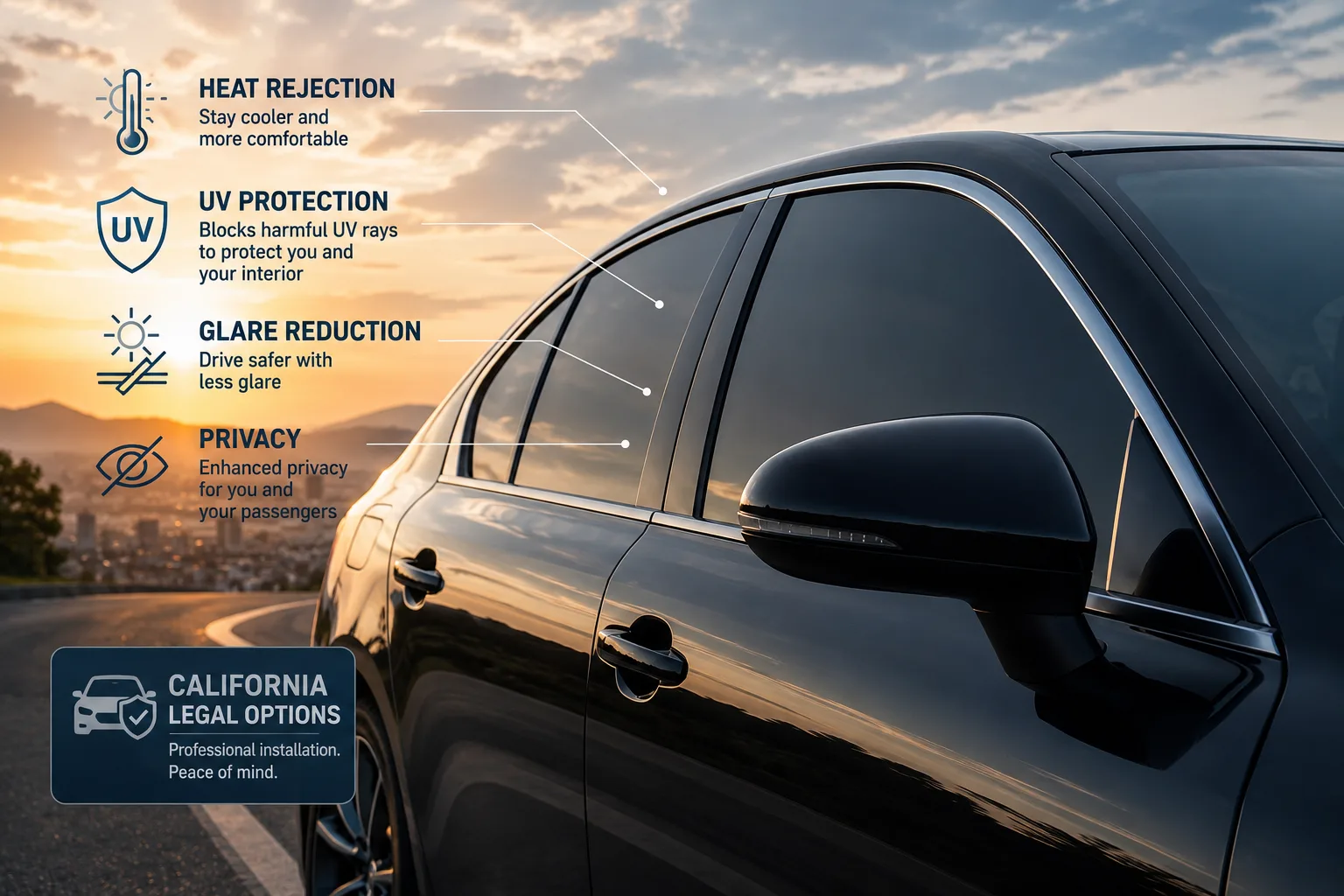
What California Law Lets You Darken
The good news for privacy is that California's tint law is far more permissive behind the front seats than most drivers believe.
- Rear side windows and the rear window: any darkness you want. There is no VLT limit at all, provided the vehicle has dual side mirrors. Five percent limo tint on the back glass is legal.
- Front side windows: at least 70 percent visible light transmission, measured for the film and the factory glass together. This is the rule people get wrong, and it is not negotiable.
- Windshield: a non-reflective strip on the top four inches, or above the AS-1 line.
- Not permitted: red, amber, or blue films, and films reflective enough to produce a mirror effect.
- Keep the certificate or sticker your installer provides identifying the film manufacturer.
The Standard San Jose Setup
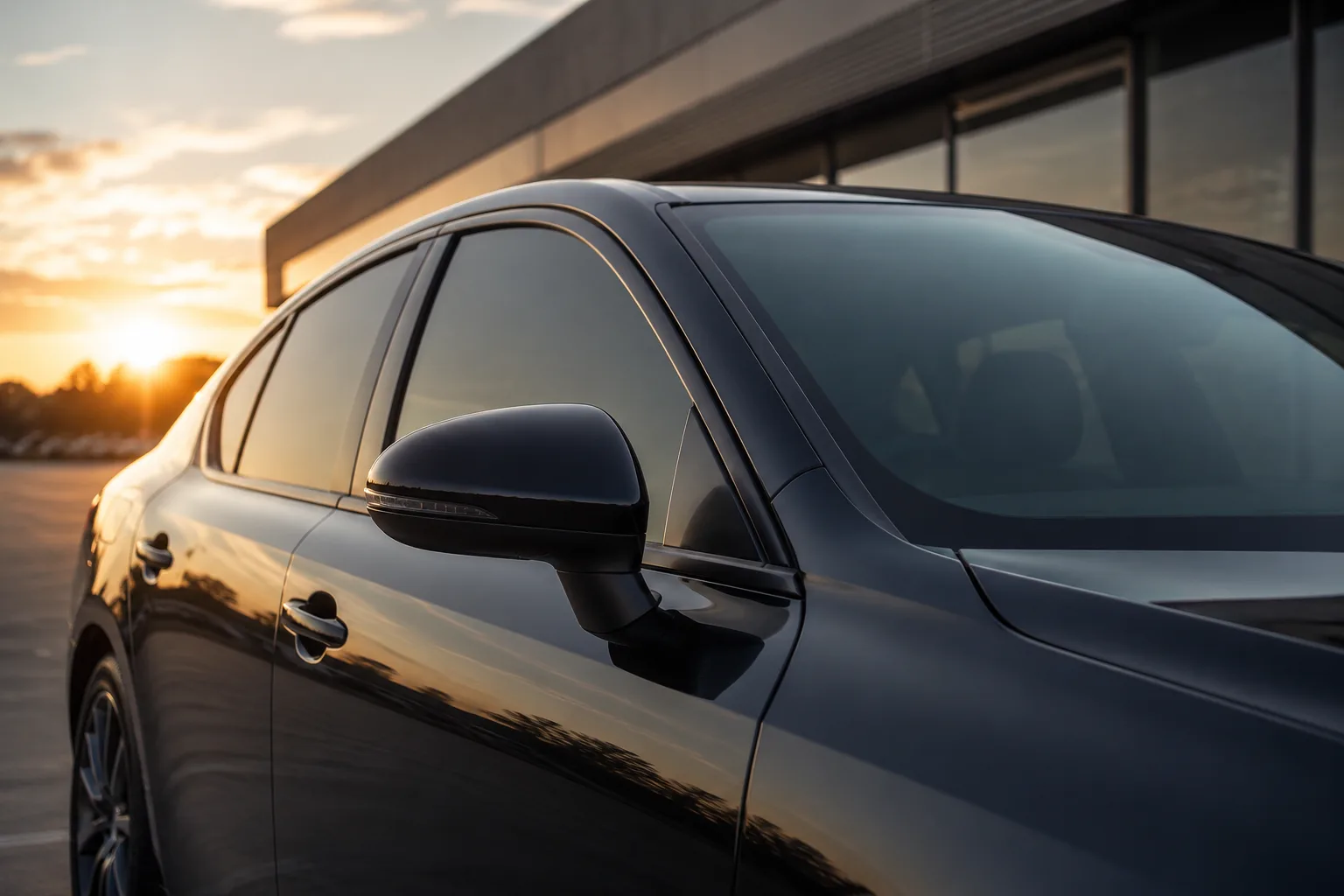
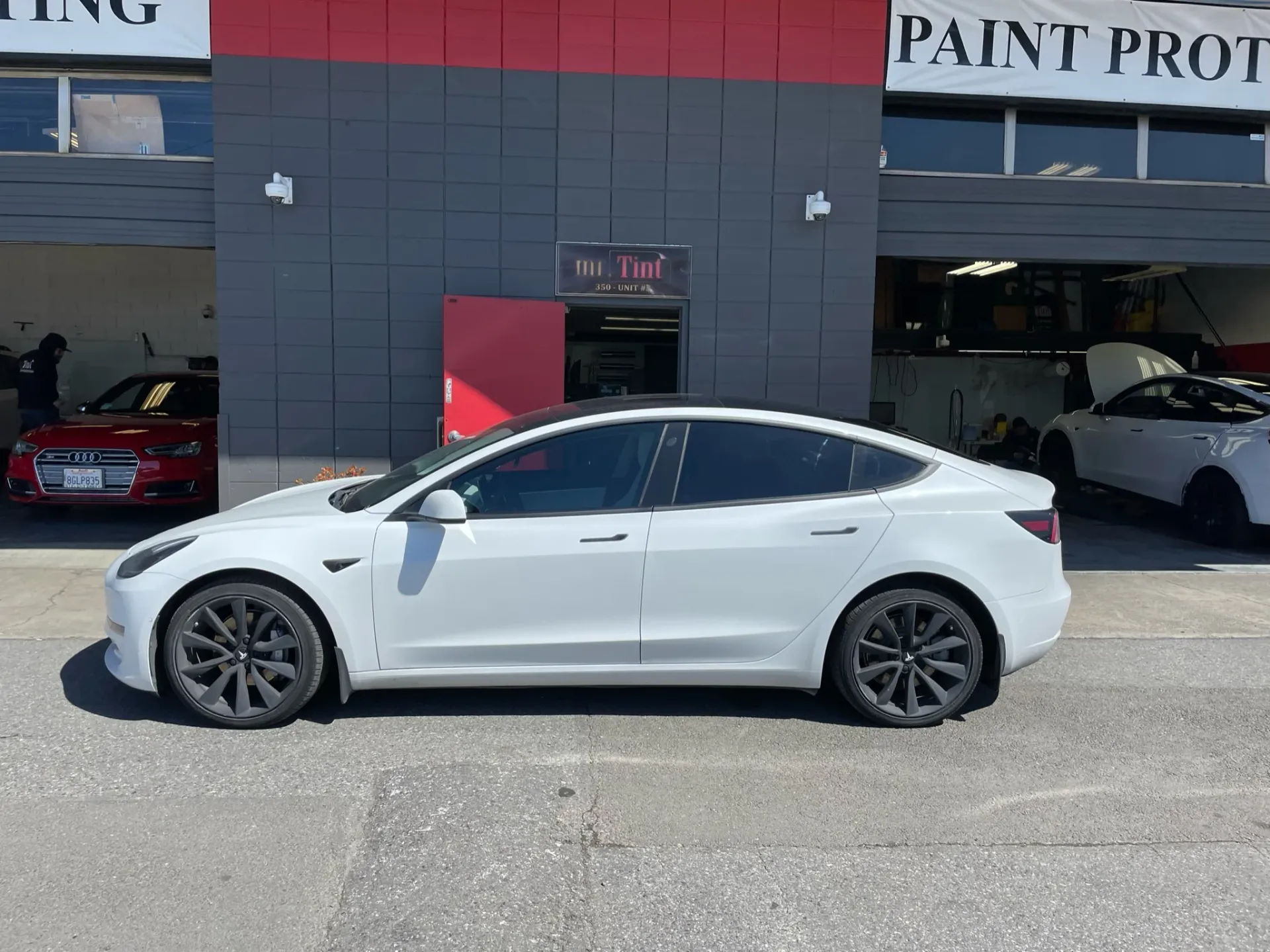
What this adds up to in practice is a car with dark rear glass and near-clear front doors. Your back seat, your cargo area, and your trunk-through-the-hatch, the three places people actually leave things, become genuinely difficult to inspect from outside. Your front windows stay legal.
Owners of hatchbacks, wagons, and SUVs get the most out of this, because their cargo area is visible through the rear glass to anyone walking past. A dark rear window on an SUV is the single highest-value privacy change available, and it is entirely legal.
Tint Is Deterrence, Not Armor
Here is where we part company with shops that will tell you whatever closes the sale.
Window film is a few thousandths of an inch of polyester. It changes what a thief can see. It does not meaningfully change how hard your window is to break, and standard tint film is not glass-break protection. A determined person with a spring-loaded punch defeats any tinted window in about a second, exactly as fast as an untinted one.
So privacy tint belongs in a stack, not on its own. Do not leave anything visible, including the empty bag that a thief will assume is not empty. Do not leave anything in the car overnight in a shared garage. Park under light. Tint raises the cost of picking your car; it does not remove your car from the game.
Privacy at Night Works Differently Than You Think
Tint depends on a light differential. During the day it is much brighter outside than inside, so an observer's eye adjusts to the exterior and the cabin reads as dark. At night, that reverses. Turn on your dome light, or sit in a lit garage with a dark street outside, and the interior of a tinted car is surprisingly visible.
Nobody selling tint mentions this. It matters if you are parking on a lit street and leaving something on the seat.
Choosing Film That Stays Dark and Does Not Fade
The cheapest dark tint is dyed film, and it works by absorbing light. Over a few San Jose summers, dyed film fades, shifts purple, and eventually bubbles as the adhesive fails. The car ends up looking worse than it did untinted.
For rear glass, where you can go as dark as you like, the question is not darkness but stability. Carbon and nano-ceramic films hold their color for the life of the car and, because they are non-conductive, do not interfere with cellular signal, GPS, or a keyfob the way metalized films can. Ceramic film adds serious infrared rejection, which is worth having on rear glass in a car that sits in a sunbaked lot all day.
Talk to Someone Who Will Tell You the Rules
If a shop offers to put twenty percent film on your front doors, they are offering you a fix-it ticket. Walk out.
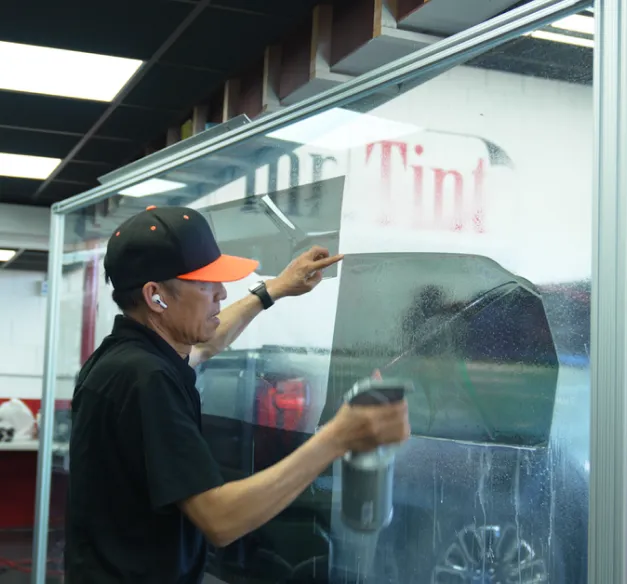
Mr. Tint has been tinting cars in San Jose long enough to know exactly where the legal line sits and how to get you every bit of privacy on the correct side of it. Come by Kiely Boulevard and we will show you what the rear glass looks like at different levels before you commit to anything.