AI Answer Summary — In short
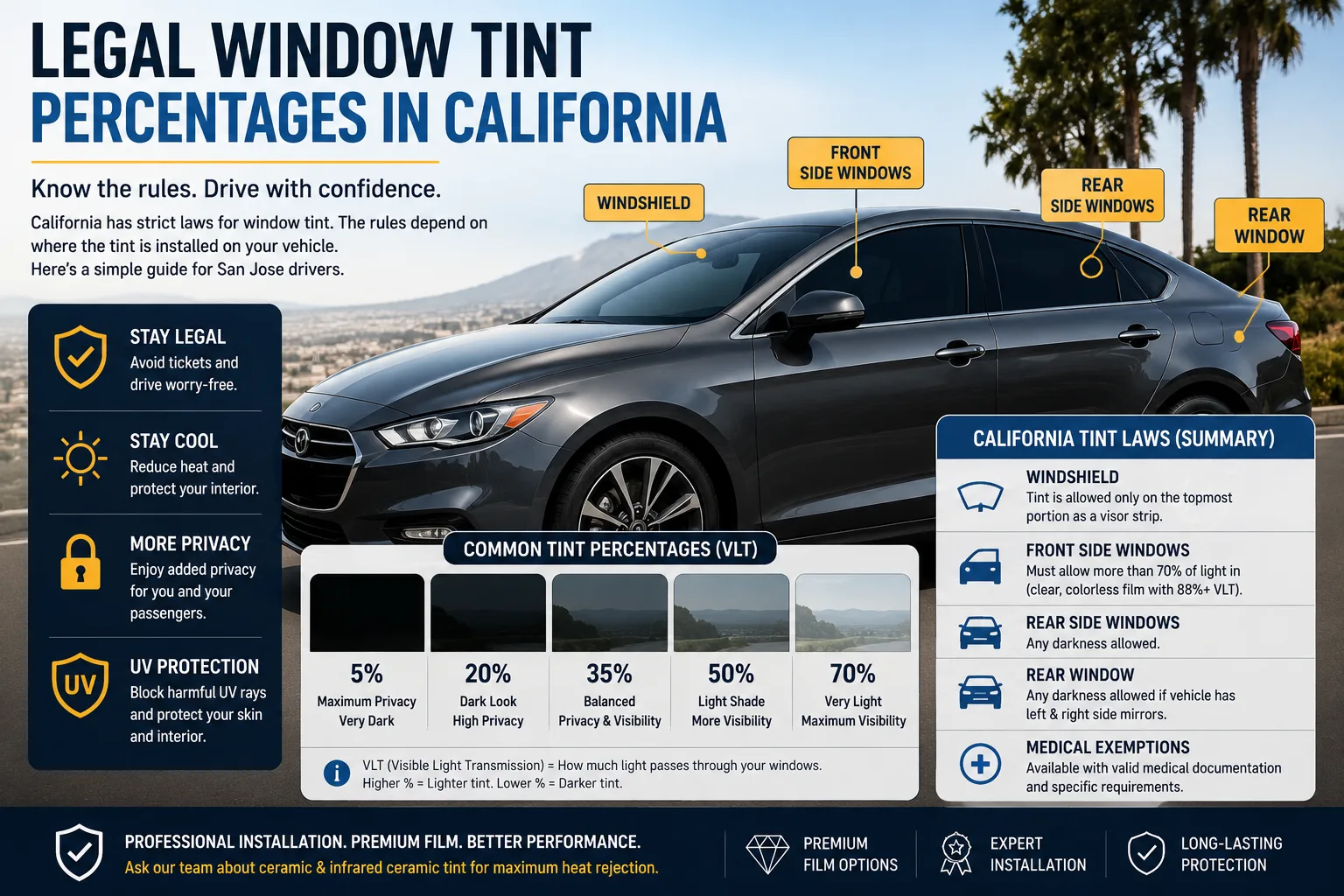
Legal window tint percentages in California depend on the window location. For the front side windows, California law focuses on clear, colorless material with at least 88% visible light transmittance, and the final glass-plus-film combination must meet a 70% light transmission requirement. Rear side windows and rear windows generally have more flexibility, especially when the vehicle has proper outside mirrors. For San Jose drivers, ceramic or infrared ceramic tint is often a smart choice because it can reduce heat and UV exposure even in lighter, more visibility-friendly shades. Mister Tint in San Jose can help drivers choose the right tint percentage and film type for comfort, style, and California driving needs.
Legal Window Tint Percentages in California: What San Jose Drivers Should Know
Window tint is one of the most popular upgrades for cars in San Jose. It makes your vehicle look cleaner, improves privacy, reduces glare, helps block UV rays, and can make your cabin feel more comfortable during sunny Bay Area drives.
But before choosing a tint percentage, there is one important question:
What window tint percentage is legal in California?
California has specific rules for automotive window tint, especially on the windshield and front side windows. That means the best tint choice is not always the darkest tint. The best choice is the one that balances appearance, comfort, visibility, performance, and California requirements.
This guide explains what tint percentages mean, which windows are more restricted, which windows offer more flexibility, and why professional installation matters.
What Does Window Tint Percentage Mean?
Window tint percentage is usually measured by VLT.
VLT stands for Visible Light Transmission. It tells you how much visible light passes through the window and tint.
A higher VLT percentage means the tint is lighter.
A lower VLT percentage means the tint is darker.
For example:
70% VLT is very light and allows a lot of visible light through.
50% VLT is lightly tinted.
35% VLT gives a darker, more noticeable tinted look.
20% VLT is darker and adds more privacy.
5% VLT is very dark and often called limo tint.
Many drivers confuse tint percentage with darkness percentage. A 70% tint does not mean it blocks 70% of light. It means it allows about 70% of visible light through.
That is why lower numbers look darker.
California Legal Window Tint Percentages: Quick Guide
Here is the simple version for most California drivers:
Window LocationCalifornia Tint GuidanceWindshieldTint is restricted. A visor strip may be allowed only in the topmost portion under specific conditions.Front side windowsClear/colorless material must have at least 88% VLT, and the final glass-plus-film combination must meet 70% light transmission requirements.Rear side windowsMore flexible because side windows behind the driver are excepted.Rear windowMore flexible when the vehicle has both left and right outside mirrors that provide rear visibility.Medical UV protectionClear/colorless transparent material may be allowed with proper medical documentation under specific conditions.
Because the law depends on window position, film type, glass type, and installation details, drivers should always confirm the right setup before choosing a shade.
Is 70% Tint Legal in California?
For many California drivers, 70% VLT is the most important number to understand.
California law requires the final window glazing with material applied to meet a 70% minimum light transmission requirement for certain clear, colorless front-side window applications.
That does not mean every “70% film” automatically makes your vehicle legal. Factory glass already has its own light transmission. When film is applied, the final number depends on the glass plus the film together.
This is why professional installers look at the full window system, not just the film percentage.
A lighter ceramic film may be a better front-window choice than a dark film if your goal is heat rejection while maintaining visibility and compliance.
Is 50% Tint Legal in California?
50% tint is lighter than 35%, 20%, or 5%, but it may still be too dark for front side windows depending on the vehicle glass and legal requirements.
On rear side windows and rear windows, there is usually more flexibility. On front side windows, drivers should be careful. Even a tint that looks light may reduce the final glass-plus-film VLT below what California allows.
50% tint may be a good choice for drivers who want a subtle look, glare reduction, and some privacy, but it should still be selected based on where it will be installed.
Is 35% Tint Legal in California?
35% tint is a popular shade because it gives a clean tinted appearance without being extremely dark. Many drivers like 35% because it improves privacy and reduces glare while still allowing reasonable visibility.
However, 35% is generally not the right choice for front side windows in California if it causes the window to fall below the required light transmission level.
35% may be more appropriate for rear side windows or rear glass, depending on the vehicle setup and mirror requirements.
If you like the look of 35% tint but want better performance on the front windows, ask about lighter ceramic or infrared ceramic film. It may provide strong heat rejection without needing to go as dark.
Is 20% Tint Legal in California?
20% tint is much darker than 35% or 50%. It is often chosen for privacy and a more dramatic look.
For front side windows in California, 20% is typically not a safe legal choice because it allows much less visible light through. It can also reduce nighttime visibility.
20% may be used more commonly on rear side windows or rear windows, depending on the vehicle and mirror setup.
Drivers who want a darker rear look often pair lighter front tint with darker rear tint for a balanced appearance.
Is 5% Tint Legal in California?
5% tint is very dark. It is commonly called limo tint because it allows very little visible light through.
5% tint is not a good choice for front side windows in California. It can create visibility issues, especially at night, and may lead to enforcement problems.
Some drivers use 5% tint on rear windows for privacy, but even then, visibility and safety should be considered. A very dark rear window can make backing up, parking, and night driving more difficult.
For most daily drivers, 5% tint is more extreme than practical.
Which Windows Can Be Darker in California?
The front side windows and windshield are the most restricted because they are critical for driver visibility.
The rear side windows and rear window usually offer more flexibility.
This is why many California vehicles use a staggered tint setup:
Lighter tint on the front side windows
Darker tint on the rear side windows
Matching tint on the rear window
Optional legal visor strip where appropriate
Clear or very light ceramic film for heat rejection where needed
This setup helps drivers improve comfort and appearance while keeping front visibility clearer.
Why Front Side Windows Are More Restricted
Front side windows are important for safe driving. Drivers need clear visibility to see:
If the front side windows are too dark, visibility can suffer. This is especially true at night, during rain, or in low-light parking areas.
California’s rules are designed to preserve driver visibility while still allowing certain sun-screening materials under specific requirements.
What About Windshield Tint?
Windshield tint is more restricted than side and rear window tint.
California allows transparent material in the topmost portion of the windshield only when specific conditions are met. The material cannot be red or amber, cannot include opaque lettering, cannot distort vision, and cannot reflect sunlight or headlight glare into other drivers’ eyes more than the windshield would without the material.
Many drivers refer to this as a windshield visor strip, but it still needs to follow the legal placement and visibility rules.
Full windshield tint should be handled carefully. If a driver needs clear UV protection for medical reasons, California law has specific documentation and material requirements.
What About Medical Exemptions?
California law includes provisions for drivers or front-seat passengers who need sun shading due to a medical or visual condition.
However, medical-related tint or sun-screening material still has specific requirements. Documentation must be carried, and certain devices may not be used during darkness. Clear, colorless, transparent UV-blocking material may also require proper medical certification.
If you believe you need tint for medical reasons, speak with a licensed medical professional and confirm the current California requirements before installing film.
Why Ceramic Tint Is Useful for California Drivers
California drivers often want heat rejection without overly dark windows. This is where ceramic tint is especially useful.
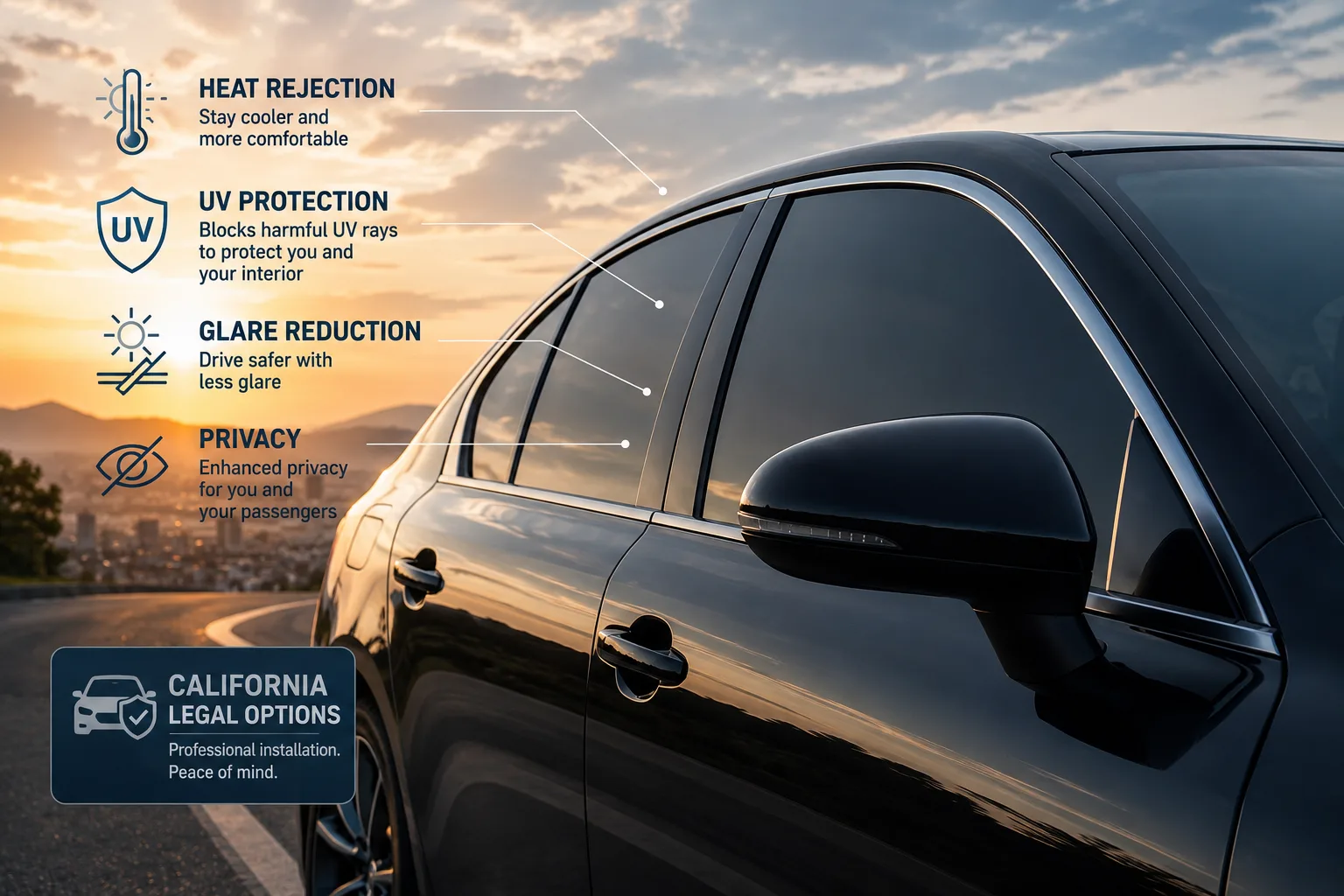
Ceramic tint is designed for performance, not just appearance. It can reduce heat, block UV rays, and cut glare even in lighter shades.
That means a lighter ceramic film may deliver better comfort than a darker basic dyed film.
For San Jose drivers, this is a major advantage. You can improve cabin comfort during sunny drives without relying only on dark tint.
Ceramic Tint vs. Regular Tint
Not all tint performs the same.
Basic dyed tint may make your windows darker, but it may not provide the best heat rejection or long-term performance.
Ceramic tint is designed to improve comfort and protection. It can help reduce heat, UV exposure, and glare while maintaining a premium look.
Infrared ceramic tint is often the premium option for drivers who want the highest level of heat rejection.
Simple version:
Regular tint changes the look.
Ceramic tint improves the look and performance.
Infrared ceramic tint gives the strongest comfort upgrade.
Common Tint Percentages and Best Uses
70% Tint
70% tint is very light and often chosen for drivers who want heat rejection and UV protection while keeping a factory-like appearance.
Best for:
Front side windows
Windshield applications where appropriate
Drivers who want visibility
Drivers who want performance without a dark look
Ceramic or infrared ceramic film
50% Tint
50% tint is still relatively light but more noticeable than 70%.
Best for:
A subtle tinted appearance
Glare reduction
Drivers who want a clean look
Some side or rear applications depending on requirements
35% Tint
35% tint is a popular middle-ground shade.
Best for:
20% Tint
20% tint is darker and more privacy-focused.
Best for:
5% Tint
5% tint is extremely dark.
Best for:
For daily driving, very dark tint should be chosen carefully because it can reduce visibility at night.
Best Tint Setup for San Jose Drivers
The best tint setup depends on your goals, vehicle, and visibility needs.
A practical San Jose tint setup may include:
Light ceramic or infrared ceramic film on front side windows
Medium or darker film on rear side windows
Matching rear window tint
Optional visor strip where allowed
Clear or very light UV/IR film where appropriate
A shade combination that keeps the car comfortable and easy to see out of
This gives you a balanced result: comfort, privacy, appearance, and visibility.
Best Tint for Tesla Drivers in California
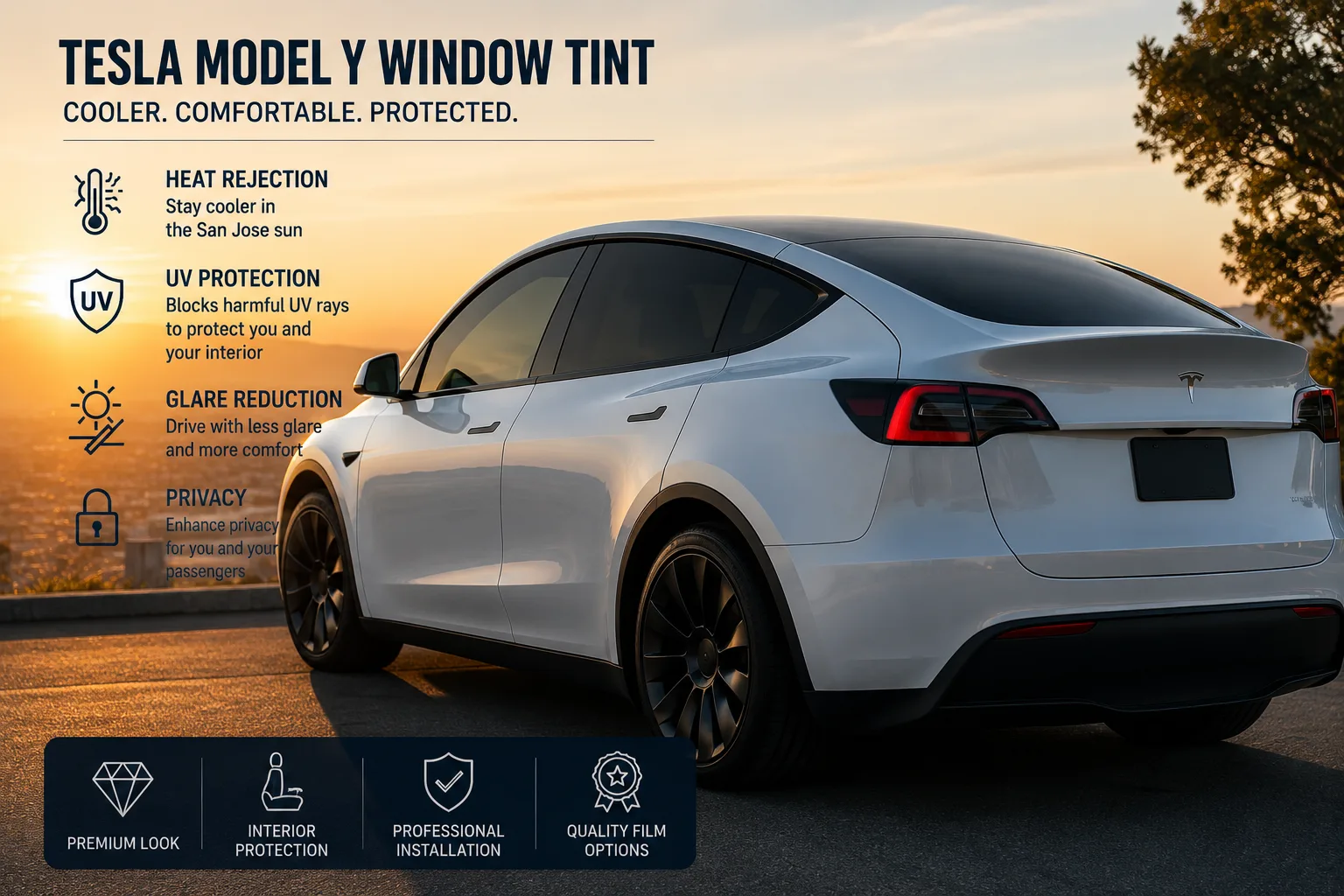
Tesla vehicles are popular in San Jose, and many owners choose ceramic or infrared ceramic tint because Tesla models have large glass areas.
A Tesla Model Y, Model 3, Model S, Model X, or Cybertruck can benefit from tint because of:
Large windows
Glass roof areas
Bright cabin exposure
Heat buildup
Screen glare
Passenger comfort needs
Interior protection
For Tesla owners, ceramic tint is often a smart choice because it can reduce heat without requiring extremely dark film.
Best Tint for Daily Commuters
If you commute in San Jose, you may benefit from tint every day.
Window tint can help during:
Morning sun
Afternoon heat
Highway glare
Parking-lot heat buildup
Long drives
School pickups
Work commutes
Weekend trips
Daily drivers often benefit most from ceramic tint because comfort matters every time you get behind the wheel.
Why Not Just Choose the Darkest Tint?
Dark tint can look good, but darker is not always better.
Very dark tint can make it harder to see at night. It can also create legal issues on front side windows. If the main goal is heat rejection, film technology matters more than darkness alone.
A high-performance ceramic film in a lighter shade can often be a better choice than a cheap dark film.
The goal should be:
Good visibility
Better comfort
Strong UV protection
Reduced glare
Clean appearance
Legal awareness
Long-term performance
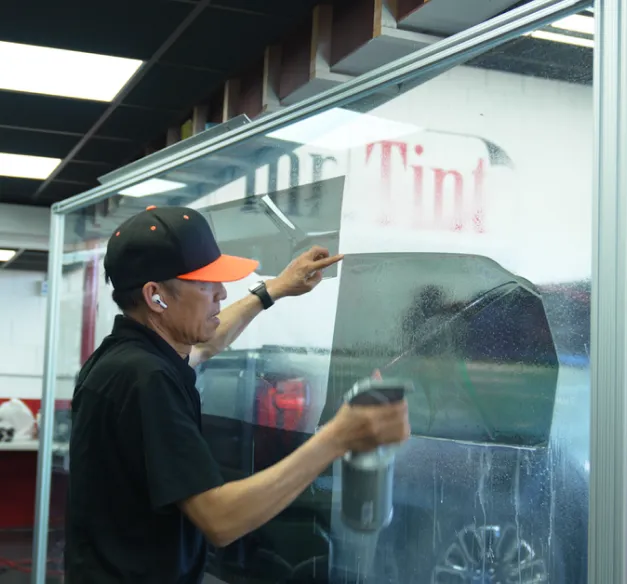
Why Professional Installation Matters
Window tint installation is not just about applying film to glass. A professional installer helps with:
Choosing the right film type
Choosing the right shade
Understanding window locations
Measuring final appearance
Avoiding bubbles and peeling
Reducing dirt under the film
Cutting film accurately
Protecting electronics and trim
Creating a clean finished look
Poor installation can lead to bubbling, purple tint, peeling edges, scratches, poor visibility, and wasted money.
Professional installation helps your tint look better and last longer.
Why Choose Mister Tint in San Jose?
Mister Tint has served San Jose and the Bay Area for more than 25 years, helping drivers improve privacy, comfort, UV protection, and style with professional window tinting.
Mister Tint offers multiple tint options, including carbon, ceramic, and infrared ceramic packages. The shop can help you compare tint percentages such as 5%, 20%, 35%, and 50%, while also explaining which choices make sense for different windows and driving goals.
Whether you want a subtle factory look, stronger heat rejection, better privacy, reduced glare, or a premium ceramic tint package, Mister Tint can help you choose the right solution.
Final Thoughts: What Tint Percentage Should You Choose?
The best legal window tint percentage in California depends on where the film is installed.
For front side windows, California is strict. Lighter, clear, or colorless materials with the right VLT performance are the safer approach. For rear side windows and rear windows, drivers often have more flexibility, especially with proper outside mirrors.
If you want comfort without legal stress, ask about ceramic or infrared ceramic tint. These films can reduce heat and UV exposure without needing to be extremely dark.
Ready to tint your vehicle in San Jose?
Contact Mister Tint today to request a quote or schedule a professional window tint consultation.