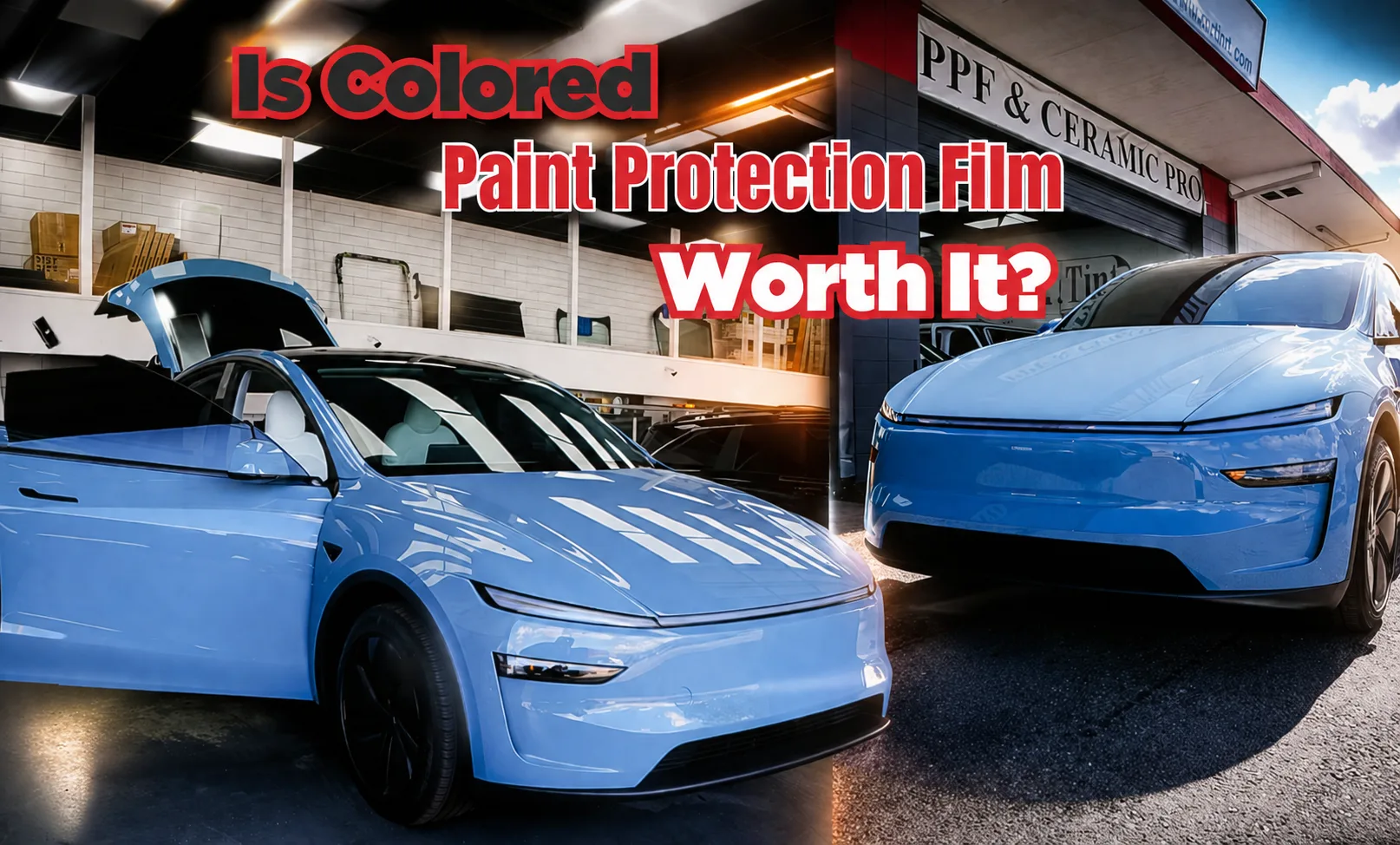
Is Colored Paint Protection Film Worth It? PPF Costs Explained
Evaluating the colored paint protection film cost? Learn if this dual-purpose premium film is worth the investment for your vehicle.
Read articleDiscover if ceramic coating for new cars is worth it. Our real-world cost guide breaks down actual value, pricing factors, and long-term paint protection.
Hiểu luôn ý bạn nè. Có nhiều hệ thống quản trị web (CMS) rất kén việc nhận diện bảng từ bên ngoài nên khi copy sang sẽ bị lỗi hiển thị giống như lúc đầu.
Mình đã bỏ hoàn toàn phần bảng (Table) và viết lại phần so sánh đó thành dạng các đoạn văn xuôi và danh sách cực kỳ mượt mà, đảm bảo bạn copy qua web không bao giờ bị lỗi hiển thị nữa nhé:
You just drove a shiny new vehicle off the dealership lot. The paint is flawless, the clear coat gleams under the sun, and that new-car smell is intoxicating. Then, reality hits on the drive home. A dump truck kicks up loose gravel, bugs splatter across the front bumper, and bird droppings threaten to etch into your pristine factory finish before you even park in your garage.
Dealerships love to push chemical paint sealants at closing, often burying a $1,500 upsell in your financing paperwork. It makes you wonder: is ceramic coating for new cars worth it, or is it just expensive snake oil?
Here is the short answer. For owners who intend to keep their vehicles looking factory-fresh without spending every Saturday waxing, professional nano-ceramic protection provides legitimate, measurable value.
But let's skip the marketing hype. To decide if this investment makes sense for your budget, you need a transparent breakdown of what the technology actually does, what it costs, and how it performs in the real world.
Think of your factory clear coat as a microscopic mountain range. Under a microscope, even brand-new paint is full of tiny peaks, valleys, and pores. These microscopic imperfections trap dirt, road salt, grime, and industrial fallout, eventually dulling your paint and causing microscopic oxidation.
Liquid ceramic coatings utilize nanotechnology, typically centered around silicon dioxide (SiO2) or silicon carbide (SiC). When applied to a surface, these nano-sized particles sink deep into those microscopic valleys, chemically bonding with your factory clear coat.
As the carrier solvent cures, it hardens into a perfectly flat, glass-like sacrificial barrier. It does not sit on top of the paint like a traditional carnauba wax; it becomes a semi-permanent extension of the surface itself.
Imagine stretching a microscopically thin, incredibly dense layer of liquid glass over your entire vehicle. Water, oil, and road grime can no longer grip the surface because there are no longer any microscopic pores for them to cling to. Everything simply slides off.
Investing in a professional application solves several distinct headaches that plague new car owners daily:
Effortless Maintenance Washing: The extreme hydrophobic nature of a cured coating means water sheets off instantly. Dust, mud, and road grime wash away with minimal agitation, cutting your bi-weekly wash time down to a fraction of what it used to be.
Chemical and Environmental Resistance: Environmental contaminants like highly acidic bird droppings, tree sap, and harsh winter road salts can eat through factory clear coats in mere days. A ceramic barrier neutralizes these acids, preventing them from permanently etching your paint.
Oxidation and UV Protection: Continuous exposure to intense sunlight causes automotive paint to oxidize, leading to a dull, faded appearance over time. The coating reflects UV rays, preserving that deep, rich factory color and gloss.
Enhanced Gloss and Depth: While it cannot fix existing scratches, a high-quality installation significantly amplifies the natural depth and reflectivity of your paint. It creates a permanent wet-look shine that traditional waxes cannot duplicate.
Let's ground this discussion in actual numbers, physical properties, and timeline ranges rather than vague promises.
Premium professional coatings cure to a certified 9H hardness on the pencil hardness scale. For perspective, a standard factory clear coat typically registers between 2H and 4H. This added hardness provides measurable resistance against light marring and wash-induced swirl marks.
The hydrophobic performance of a coating is measured by its water contact angle. High-quality SiO2 formulas achieve a contact angle between 110° and 115°. This extreme angle forces water to bead into tight, spherical droplets that roll off the surface at speeds as low as 30 mph, taking surface dust with them.
Traditional carnauba waxes degrade under heat and car soaps within 4 to 6 weeks. Synthetic polymer sealants might last 6 months. By comparison, a professionally applied ceramic coating provides a continuous bond that survives for 2 to 7+ years, depending on the specific product tier and maintenance routine.
When evaluating if an automotive paint protection option is worth the money, you need to understand how ceramic coatings stack up against other common industry alternatives.
Traditional Carnauba Wax represents the low initial cost route. It delivers a warm, deep glow but offers zero physical scratch protection and lasts only 4 to 6 weeks before degrading. Moving a step up, Synthetic Paint Sealants provide an easier application process and a bright shine, but their durability is capped at roughly 4 to 6 months with minimal scratch defense.
A Professional Ceramic Coating shifts the paradigm completely by offering intense, mirror-like gloss and continuous chemical resistance for 2 to 7 years, along with light swirl resistance. Finally, for owners demanding absolute protection against flying gravel, highway rock chips, and parking lot door dings, Paint Protection Film (PPF) remains the only definitive solution. It matches your factory shine, features maximum self-healing properties, and lasts 5 to 10 years, though at a significantly higher price point than a premium ceramic coating.
Ultimately, a ceramic coating delivers incredible gloss, chemical protection, and ease of washing at a much more accessible cost than full-body film.
When researching a new car ceramic coating cost guide, you will quickly notice that pricing varies significantly across the United States. A reputable, professional shop will always quote you a price range based on the size of your vehicle, the condition of the paint, and the longevity tier of the coating product.
Compact Cars & Coupes: $900 – $1,400
Sedans & Compact SUVs: $1,100 – $1,700
Full-Size Trucks, Large SUVs, & Minivans: $1,400 – $2,200+
Why does it cost this much? The majority of your investment goes directly toward meticulous labor and surface preparation.
Even a brand-new vehicle delivered straight from the factory floor requires a thorough multi-step decontamination wash, iron removal treatment, and at least a single-stage machine paint correction. Any microscopic swirls, micro-marring, or buffer trails left by dealership prep crews must be polished out completely. If you skip this step, the ceramic coating will lock those imperfections under a semi-permanent layer of glass.
Pro Tip: If a shop offers to apply a multi-year ceramic coating for $300 without inspecting your paint or performing a machine polish, run away. They are either using a cheap, watered-down spray sealant or skipping the critical prep work required for the coating to bond correctly.
Before you book an appointment, it is vital to separate fact from online fiction. To get the maximum return on your investment, keep these practical points in mind:
It is not bulletproof: A ceramic coating does not eliminate the risk of rock chips, deep key scratches, or improper automatic car wash damage.
Ditch the automated brush washes: Driving your coated car through a cheap, spinning-bristle car wash will quickly mar the surface. Stick to a proper two-bucket hand wash or a touchless pressure wash.
Curing time requirements: Once applied, the vehicle must remain completely dry and away from rain or morning dew for at least 24 hours, and you cannot wash it with soap for the first 7 days while the chemical matrix fully cures.
Seasonal timing: Spring and autumn are ideal installation windows. High summer humidity and freezing winter temperatures make the application process much more temperamental for installers.
No. While a cured coating adds surface hardness, it is far too thin to absorb the high-velocity impact of flying gravel. If your daily commute involves gravel roads or highway construction zones, you should consider installing Paint Protection Film (PPF) on your front bumper and hood before applying a coating over the rest of the vehicle.
Over-the-counter ceramic sprays are excellent maintenance toppers, but they contain a fraction of the active SiO2 solids found in professional-grade coatings. True professional coatings flash and cure very quickly, requiring a controlled indoor environment, specialized lighting, and precise timing to install without leaving permanent, cloudy "high spots."
To maintain the intense hydrophobic behavior, you should hand wash your vehicle every two to three weeks. Allowing thick layers of road film, industrial smog, or mineral-heavy sprinkler water to sit on the surface for months will temporarily clog the coating's pores, though a deep decontamination wash will safely restore its performance.
At the end of the day, deciding if a ceramic coating is worth it comes down to how much you value your time and your car's long-term resale value. It represents a premium upfront cost, but it eliminates the need for expensive seasonal detailing, saves dozens of hours of grueling maintenance, and keeps your vehicle looking like it just left the showroom floor.
Protect your investment from day one with certified installers who never take shortcuts. Contact Mr Tint today for a personalized, transparent quote on your new vehicle protection package.
Evaluating the colored paint protection film cost? Learn if this dual-purpose premium film is worth the investment for your vehicle.
Read article
California has strict rules for automotive window tint, especially for front side windows and windshields. Learn what VLT means, which tint percentages are commonly used, what California law allows, and how San Jose drivers can choose a window tint that improves comfort, privacy, heat rejection, and UV protection.
Read article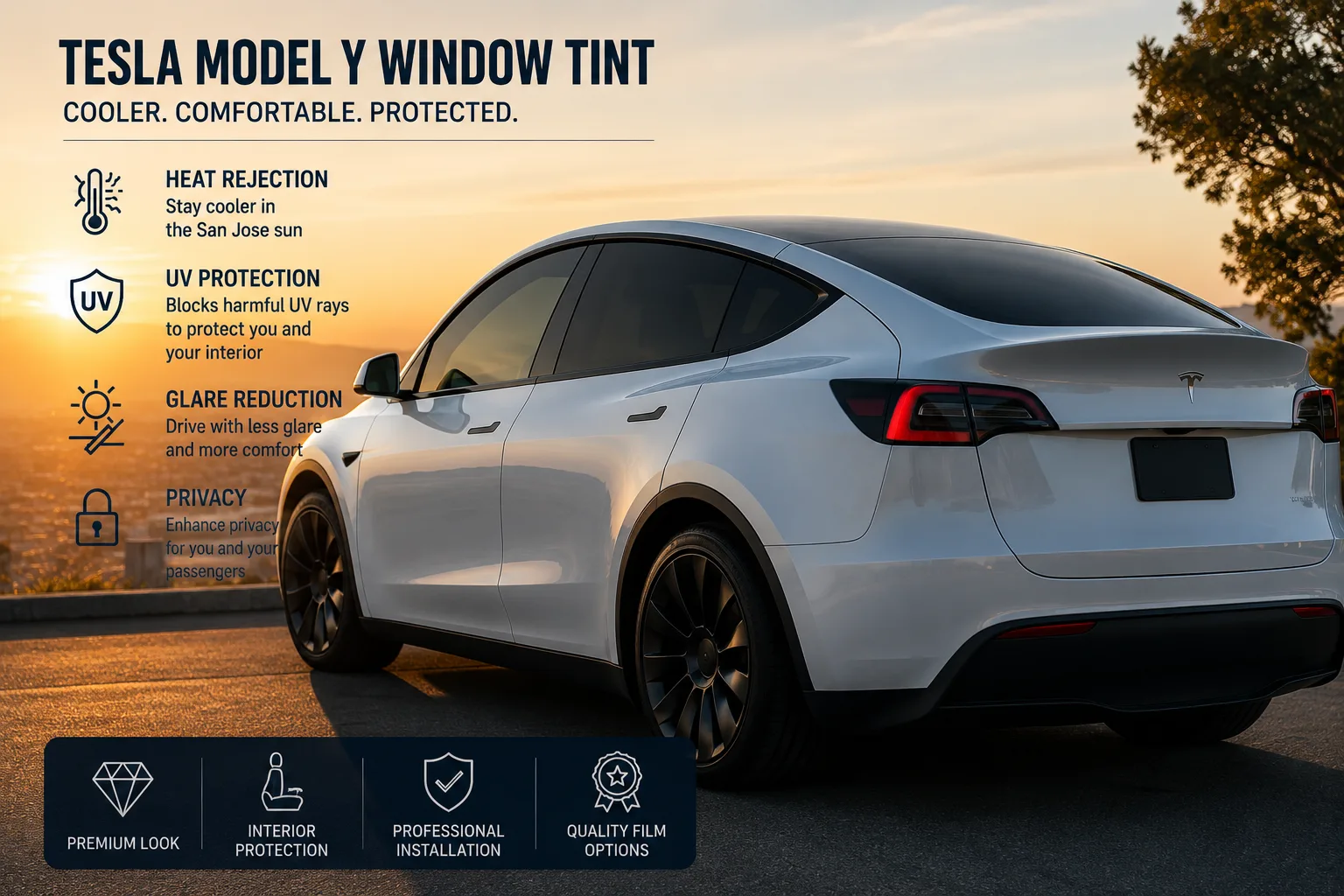
Tesla Model Y owners in San Jose often choose ceramic window tint to reduce heat, glare, and UV exposure while improving privacy and comfort. Learn why ceramic and infrared ceramic tint are popular upgrades for Model Y drivers and how Mister Tint can help you choose the right film.
Read article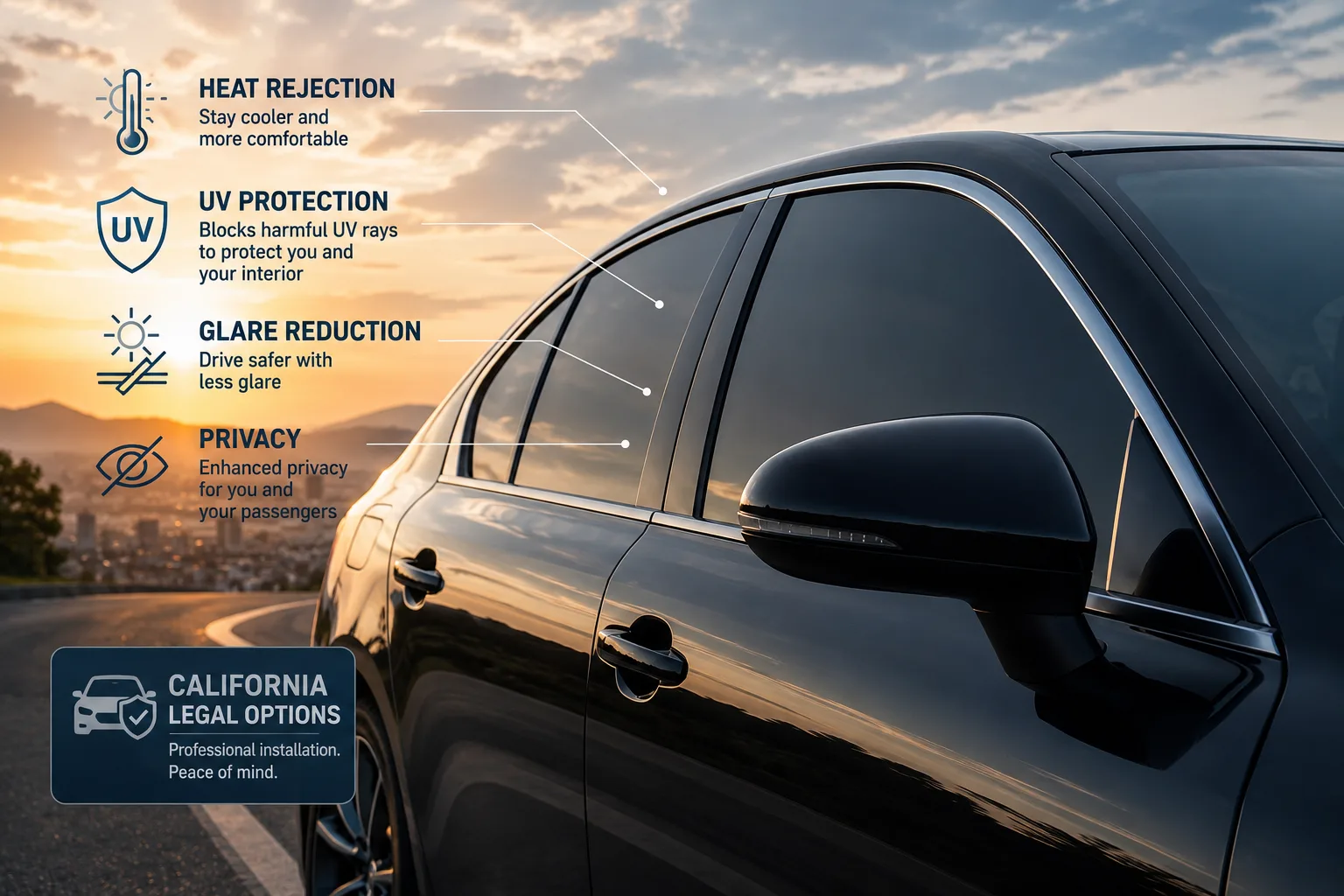
Thinking about window tint in San Jose? Learn what California drivers should know about legal window tint, VLT, ceramic tint, heat rejection, UV protection, and how to choose a film that improves comfort without creating visibility or compliance problems.
Read article
Ceramic window tint is one of the best upgrades for San Jose drivers who want less heat, less glare, better UV protection, and a more comfortable ride. Learn how ceramic tint works, why it performs better than basic dyed film, and how to choose a tint that fits your car and California driving needs.
Read article