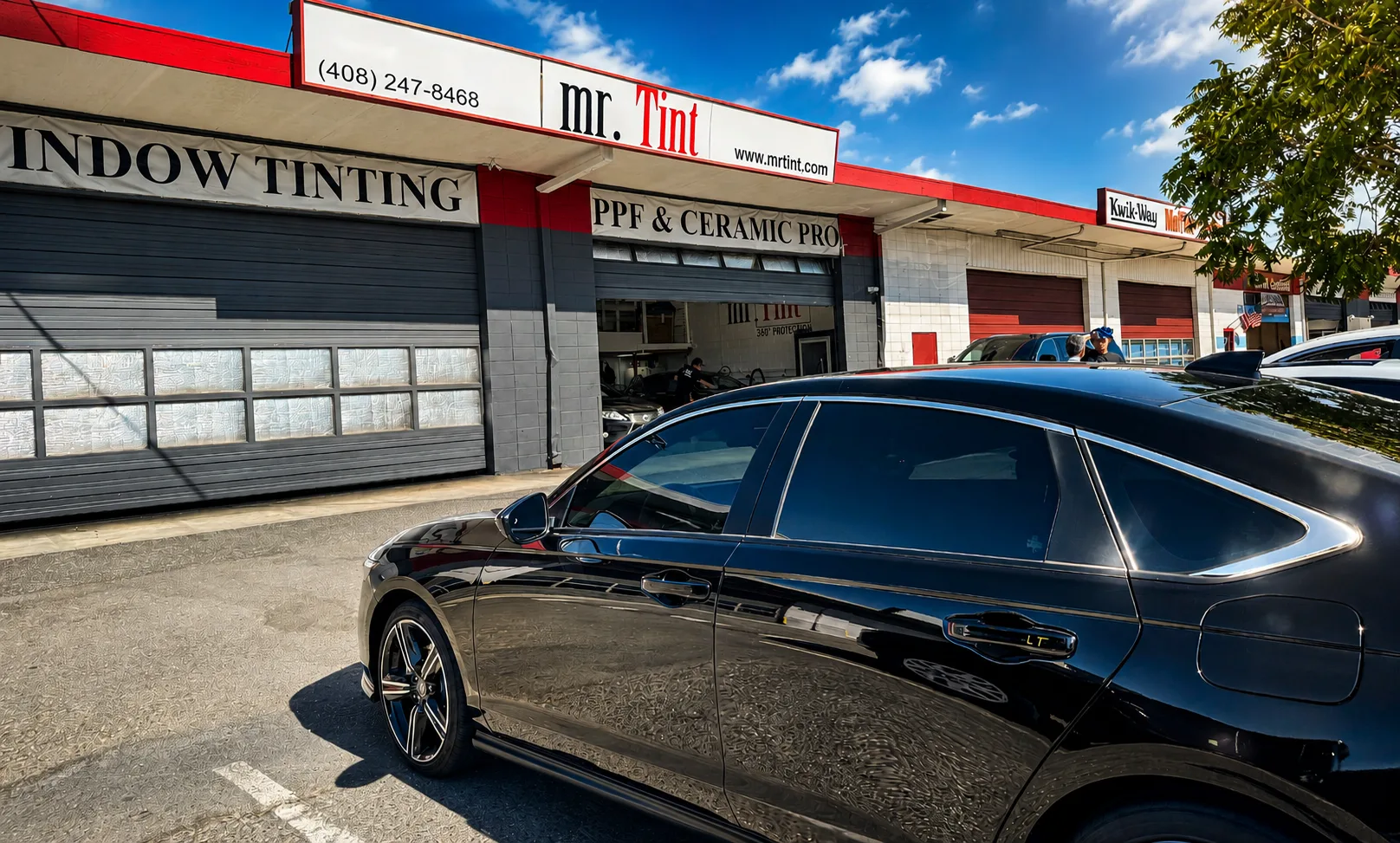
A ceramic coating is at its most useful in exactly the conditions San Jose serves up in mid-summer: relentless sun, tree sap in residential parking, bird droppings, and — increasingly — a fine layer of wildfire ash that settles on everything during fire season. The coating does not make your car self-cleaning, but it does change the odds dramatically in your favor. The catch is that the wrong summer habits can undo a good coating faster than you would think.
Why summer is the coating's moment
The whole point of a ceramic coating is a slick, hydrophobic surface. Contaminants struggle to bond to it, and water sheets off instead of drying into spots. In summer that matters more than usual, because the two things that damage paint most — heat-baked contaminants and hard-water spots — are both at their peak. Sap and droppings that would etch bare clear coat in the heat sit on top of a coating instead, and rinse away with far less effort.
Fire-season ash is the newest reason this matters locally. Ash is mildly abrasive and, once wet, mildly caustic. On bare paint, wiping it off dry is a great way to grind fine scratches into the finish. On a coated car, a rinse lifts most of it before you ever touch the surface.
The summer wash routine that protects the coating
The single biggest threat to any coating is not the sun — it is bad washing. Follow a few rules and the coating lasts years; ignore them and you will swirl it up in a season.
- Never wash in direct sun or on hot paint. Water and soap dry instantly on a hot panel and leave mineral spots that can bond even to a coating. Wash early in the morning, in shade, or after the car has cooled.
- Rinse first, thoroughly. Especially during fire season — flood the ash and dust off before any mitt touches the paint. This is what prevents scratching.
- Use the two-bucket method — one bucket of soapy water, one of clean rinse water — so you are not dragging grit back across the paint.
- Use a pH-neutral, coating-safe soap. Harsh degreasers and heavy waxes can shorten a coating's life or leave a film that masks the hydrophobic effect.
- Dry with a clean microfiber or a blower, not an old towel. Because water beads and sheets on a coating, there is far less to dry — but what remains should be lifted gently, not scrubbed.
Deal with contaminants fast
Bird droppings and sap are the summer villains. On a coating you have more time, but not unlimited time — in 100-degree heat, droppings can still etch if left for days. The habit to build is simple: spot-rinse or gently remove them when you notice, using a little water and a soft microfiber. A coated surface usually lets them come off with a single wipe, which is exactly the payoff you paid for.
A light top-up, not a re-coat
Coatings slowly lose their edge as road film and minerals accumulate. A periodic ceramic-boosting spray — applied to a clean, cool car — refreshes the hydrophobic behavior between professional services and is genuinely worth doing once the water stops beading like it used to. This is maintenance, not a substitute for the base coating.
The first week matters most
A freshly applied ceramic coating needs time to fully cure and bond to the paint — typically several days, and installers will give you a specific window. During that period the coating is at its most vulnerable, and a summer install has an extra wrinkle: heat speeds curing, but rain, sprinklers, and morning dew can leave water spots on a coating that has not finished hardening. Keep the car dry and out of the sprinklers for the first week if you can, and do not wash it during the cure window unless your installer tells you otherwise.
After that first week, the routine below is all it takes. The mistake people make is treating a brand-new coating as bulletproof on day one and parking it under a sap-dropping tree the night of the install. Give it the short cure it needs and it will reward you for years.
The honest limitation
A ceramic coating is not a force field, and summer does not change that. It will not stop a rock chip, it will not survive an automatic brush car wash without picking up marring, and it will not make a neglected car clean itself. If you run your coated car through a spinning-brush wash all summer, you will scratch it regardless of the coating — the coating just means the scratches show up a little slower. Touchless washes and careful hand washing are what let the coating do its job.
Kept simple — rinse first, wash cool, use the right soap, and deal with contaminants promptly — a ceramic coating turns a brutal San Jose summer from a paint hazard into a quick rinse in the driveway. That ease is the entire reason to have one, and a little discipline in July and August is what keeps it for years.